
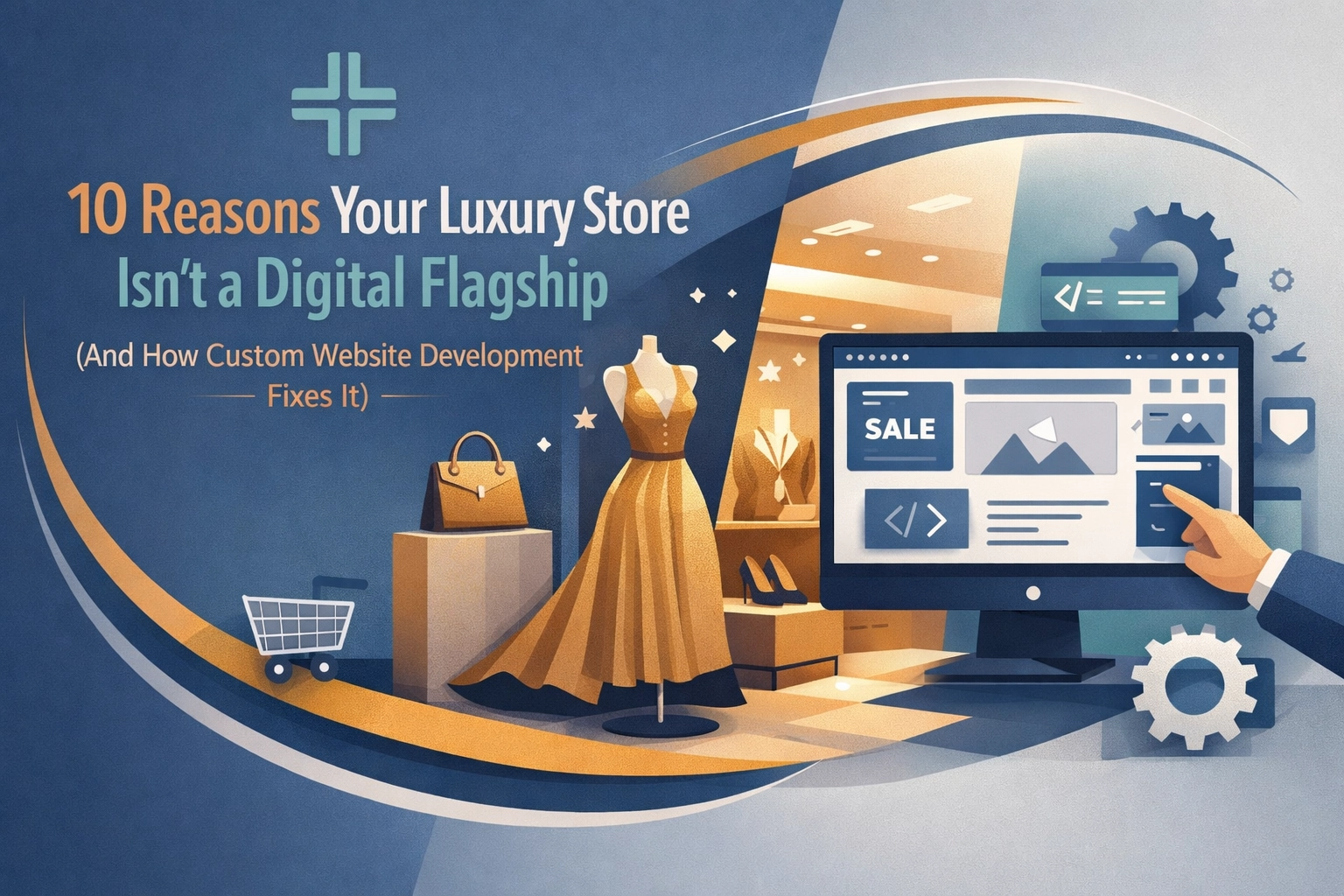
Begin by visualizing the entrance to a high-end boutique in the Dubai Mall or the DIFC. Every detail, from the scent in the air to the weight of the door handle, is engineered to convey prestige. Now, look at your website. If there is a disconnect between that physical grandeur and your digital presence, you don't have a digital flagship: you have a digital catalog.
In the luxury sector, the "Digital Flagship" is no longer an optional extension; it is the primary touchpoint for a global audience. However, many premium brands in the UAE struggle to translate their heritage and exclusivity into the digital realm. This guide serves as a blueprint to help you identify where your online store is falling short and how bespoke custom website development can bridge the gap between "standard e-commerce" and "luxury experience."
1. The Template Paradox: Exclusivity Can't Be Mass-Produced
The first reason your store might feel "average" is the use of cookie-cutter templates. Luxury is defined by rarity and bespoke craftsmanship, yet many brands build their sites on the same frameworks used by budget retailers. This creates a generic user journey that fails to spark the emotional connection required for high-ticket sales.
When you opt for ecommerce website development dubai services that prioritize custom builds over templates, you are essentially commissioning a digital architect. This ensures that every scroll, hover effect, and transition is unique to your brand DNA. A custom-coded interface removes the constraints of "what the platform allows" and replaces it with "what the brand demands."
2. The Exclusivity vs. Accessibility Friction
Luxury thrives on exclusivity, but the internet is built for accessibility. This paradox often leads to a "democratized" brand feel that can dilute your prestige. Many luxury stores fail because they treat every visitor the same way, losing the "private salon" feel of a physical flagship.
Through strategic ui ux design services, you can implement tiered digital experiences. Imagine a website that recognizes a VIP client and unlocks a hidden "Collection Privée" or offers a direct line to a personal shopper via a bespoke interface. This maintains the allure of the "hard-to-get" while providing the convenience of digital commerce.

3. Inadequate Digital Presentation Control
In a physical store, you control the lighting, the positioning, and the tactile experience. Online, you often lose that control to responsive grids that break your aesthetic on different devices. Many luxury retailers struggle with a lack of high-fidelity control over how their products are presented across various screens.
Custom development allows for "Art Direction as Code." Instead of standard image galleries, a digital flagship uses immersive video, 3D product rendering, and dynamic layouts that adapt without losing their editorial integrity. This ensures that whether a client is on an iPhone in London or a desktop in Dubai, the brand's visual standards remain uncompromised.
4. The Omnichannel Integration Gap
A common pitfall for Dubai’s luxury retailers is the "silo" effect. Your online inventory doesn't talk to your boutique inventory, and your digital customer profiles don't reflect in-store purchase history. This creates a disjointed experience where a client feels like a stranger when switching channels.
A true digital flagship acts as the central nervous system of your brand. By integrating advanced headless architectures: a topic we will explore deeply in our upcoming post, The Headless Advantage: Why Dubai’s Fastest-Growing Retailers are Moving Away from Traditional Platforms: you can synchronize inventory, loyalty programs, and clienteling tools in real-time.
5. Conservative Culture vs. Digital Agility
Research shows that luxury brands often have conservative cultures that are slow to adapt to digital transformation. This organizational resistance often leads to websites that are "safe" but outdated by the time they launch.
To fix this, your website development partner must act as a strategic consultant. At Tadween Space, we believe that technology should follow strategy. We help brands move past the "bricks-and-mortar" mindset to embrace a digital-first strategy that respects heritage while leveraging modern agility.
6. Transaction Value Disparity
It is a documented challenge: luxury consumers typically spend less per purchase online than they do in-store. This is because the digital experience often lacks the persuasive power of a dedicated sales associate and the immersive environment of a physical boutique.
Custom website development addresses this by incorporating "Human-Centric Digital Tools." This includes high-definition video consultations, AI-powered styling recommendations, and virtual try-on tools that replicate the confidence-building aspects of an in-person visit. If your site is just a "Buy" button, you are leaving significant revenue on the table.
"A luxury website shouldn't just sell a product; it should sell an invitation into a world where every detail is considered." : Tadween Space Design Philosophy
7. Treating E-commerce as an Extension, Not a Destination
If you view your website as merely an "online version" of your store, it will always be second-best. A digital flagship must offer something the physical store cannot: be it a deeper look into the brand's archive, interactive storytelling, or global availability.
Use this space to elaborate on the brand's story. Modern UI/UX allows for "scrollytelling," where the history of a timepiece or the craftsmanship of a handbag is revealed through interactive elements as the user explores the page. This turns a transaction into a journey.

8. The Failure to Leverage Intelligent Personalization
In the UAE’s competitive market, "Hello [Name]" is no longer enough. Many luxury sites fail because their personalization is superficial. They don't use data to anticipate needs or reflect the specific cultural nuances of the Middle Eastern market.
Custom platforms allow for deep data integration. This is where we look toward the future of the industry, which we cover in the first of our upcoming series: Intelligent E-commerce: How AI-Driven Personalization is Redefining the Luxury Journey in the UAE. By using AI to analyze browsing patterns and local trends, your site can offer a bespoke storefront for every individual user.
9. Complexity in Global Distribution and Compliance
For brands operating out of Dubai but selling globally, the technical hurdles are immense. Managing international taxes, geo-blocking regulations, and territorial pricing often breaks standard e-commerce setups.
A bespoke solution provides the "Brand Safety" and control needed to manage selective distribution. Custom backends can automate compliance with international regulations while ensuring that your pricing strategy remains consistent and protected across all territories. You can see how we've handled complex builds in our portfolio.
10. Technical Debt and Template Constraints
Finally, many luxury stores are held back by "Technical Debt": the cumulative cost of shortcuts taken during initial development. Over-reliance on third-party plugins to make a template "do more" leads to slow load times and security vulnerabilities, both of which are unacceptable in the luxury space.
Building a custom foundation ensures that your site is fast, secure, and scalable. It allows for the integration of local innovations, such as the payment solutions we will discuss in our series: Seamless Spending: Integrating Advanced 'Buy-Now-Pay-Later' & Local Payment Innovations for the Dubai Market.

Transforming Your Presence: A Strategic Roadmap
Summarize your current digital state. Is it a reflection of your brand's excellence, or is it a bottleneck? If you find your site falling into these ten traps, it is time to rethink your digital architecture.
Moving from a basic e-commerce site to a digital flagship requires more than just a fresh coat of paint. It requires a partner who understands the intersection of high-end aesthetics and robust engineering. For more insights on avoiding common pitfalls, explore our guide on 7 mistakes Dubai businesses make with website redesign services.
As you move toward your next digital evolution, consider the value of bespoke design. We dive deeper into this in our upcoming post: Bespoke vs. Basic: How Custom UI/UX Design is Doubling Conversions for Premium Local Brands.
Why the "Digital Flagship" Matters Now
This is where you reinforce the urgency. Online luxury sales are projected to account for a significant portion of all transactions in the coming years. In a city like Dubai, where innovation is the baseline, a mediocre website is a reputational risk.
Custom website development isn't just about code; it's about creating a digital space that feels as exclusive and well-crafted as the products you sell. It’s about ensuring that your brand’s story is told with the same passion and precision online as it is offline.
Ready to elevate your store into a true digital flagship? Explore our services or check our FAQ to see how we can help you redefine your digital presence.
This article is part 1 of our "Premium E-commerce" series for Dubai luxury brands. Stay tuned for our next deep dive into AI-Driven Personalization.
Leave a Reply