
You've likely asked yourself this question while watching your competitors invest in custom platforms: is it genuinely worth moving beyond template solutions? The answer coming from Dubai's premium retail sector isn't just "yes": it's a resounding affirmation backed by conversion data that's hard to ignore. While global e-commerce matures into a sophisticated battlefield, the retailers winning in Dubai's luxury market share a common thread: they've abandoned the cookie-cutter approach.
The 2026 E-commerce Landscape: Where Templates Stop Working
Standard platforms served their purpose brilliantly when online retail was finding its footing. Shopify, WooCommerce, and Magento democratized e-commerce, allowing businesses to launch quickly. But here's what premium retailers are discovering in 2026: those same platforms that got them started are now holding them back. The conversion rates have plateaued. The customer experience feels indistinguishable from competitors. The backend limitations create workarounds that waste your team's time.
This isn't about abandoning what works: it's about recognizing when your ambitions have outgrown your infrastructure. With 70% of online purchases now occurring on mobile devices, the technical debt of template solutions becomes painfully visible. Your checkout process loads slowly. Your product pages don't adapt intelligently. Your brand experience, which commands premium pricing offline, gets diluted through generic digital touchpoints.
The SaaS Ceiling: Why Luxury Brands Hit Growth Limits
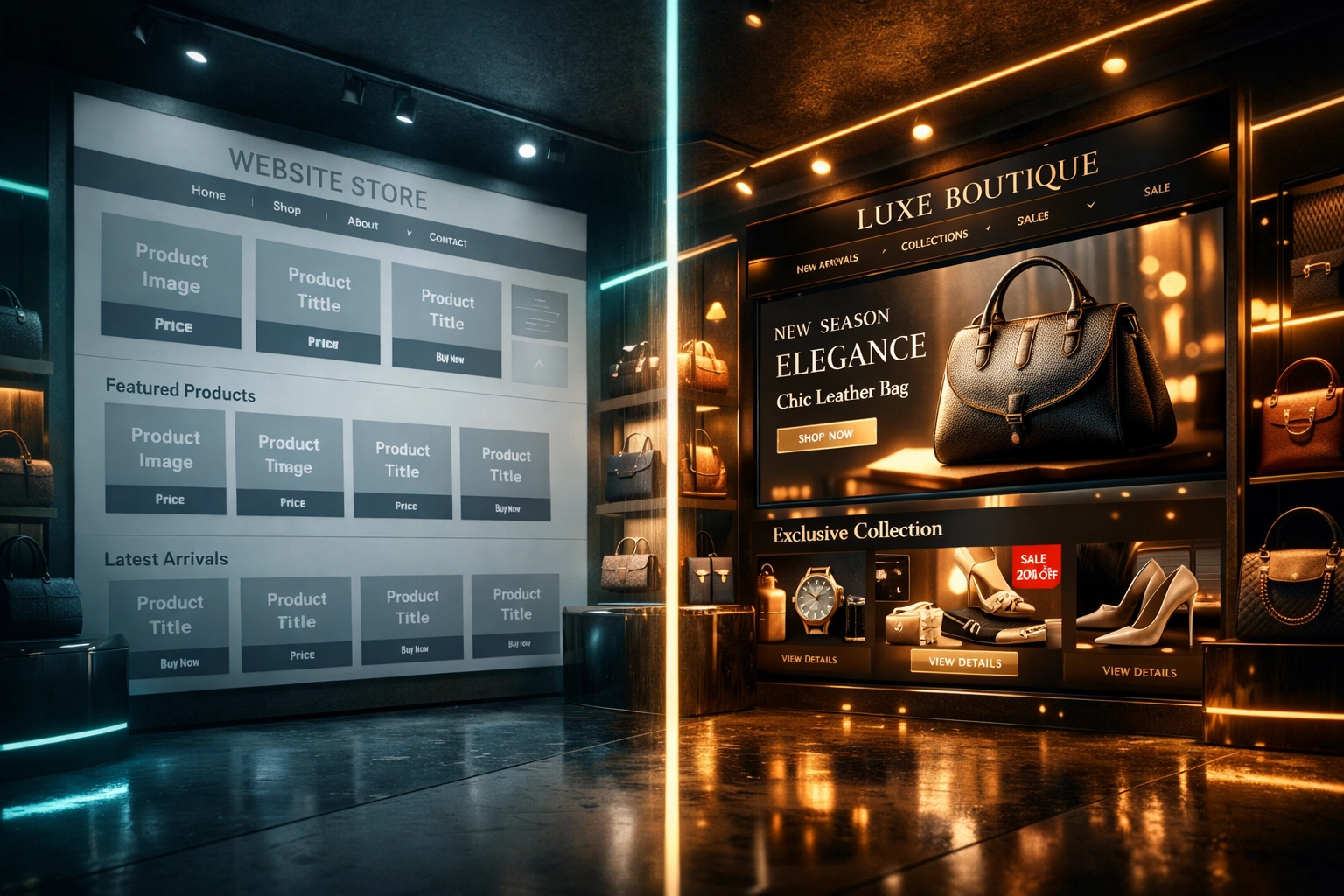
Begin by examining the constraints that SaaS platforms impose on scaling businesses. Your checkout customization options remain restricted to what the platform provider deems necessary: not what your customers need. Backend logic becomes a puzzle of plugins and third-party integrations, each adding latency and compatibility concerns. When traffic surges during your seasonal campaigns or limited drops, performance degrades precisely when you need it most.
Dubai's premium retailers face unique challenges that template solutions weren't designed to address. Integrating local payment innovations requires custom development work that fights against platform limitations. Advanced "buy-now-pay-later" options specific to the UAE market demand deeper backend control. Multilingual experiences that maintain luxury positioning need sophisticated content architecture, not simple translation plugins. The app dependency trap becomes expensive: monthly costs accumulate as you patch together functionality that should work seamlessly.
What Custom Website Development Actually Delivers
Custom e-commerce development isn't about complexity for its own sake: it's about architecting digital experiences that match your brand promise. You gain complete control over site architecture, allowing your technical team to optimize every aspect of performance. Page speed optimization becomes surgical rather than hopeful. Schema markup and structured data get implemented precisely for your product categories and target market. Internal linking strategies support your content hierarchy without plugin conflicts.
The conversion impact tells the story most clearly. Custom solutions are delivering up to 40% increases in conversion rates for retailers who've made the transition. This improvement stems from creating tailored customer journeys that understand context. When a customer browses from Dubai Marina versus Downtown, your platform can dynamically adjust delivery options, product recommendations, and even visual merchandising. Location-based marketing becomes native functionality rather than a bolt-on feature.

"The retailers who treat their digital flagship as seriously as their physical flagship are the ones capturing market share in 2026. It's no longer about being online: it's about being unforgettable online."
The Mobile-First Reality for Premium Experiences
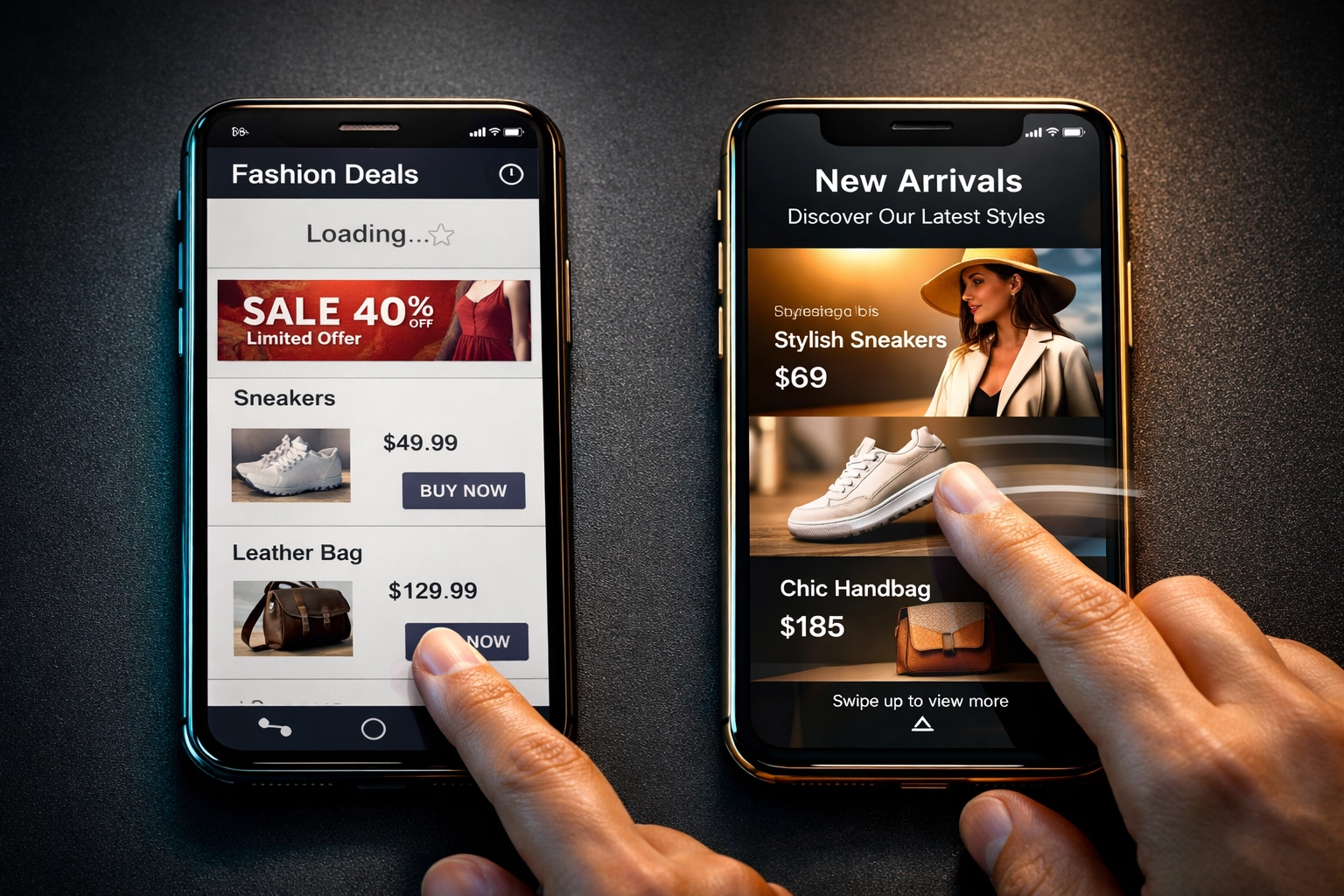
Consider how your premium customers actually shop. They're researching products during their commute, comparing options while waiting for meetings, and completing purchases from their devices throughout the day. Touch-friendly interfaces aren't optional: they're table stakes. But custom ecommerce website development Dubai firms are implementing goes beyond responsive layouts. It's about gesture-based navigation that feels intuitive. Product galleries that load instantly, even on variable network conditions. Checkout flows that anticipate input errors before they happen.
Your desktop experience and mobile experience shouldn't be the same design compressed: they should be purpose-built for different contexts. Custom development enables you to serve lightweight, optimized assets to mobile users while delivering rich, immersive experiences to desktop browsers. This level of sophistication matters when your average order value exceeds AED 2,000 and customer expectations mirror the physical boutique experience they're accustomed to.
Advanced SEO That Actually Moves the Needle
Standard platforms offer basic SEO capabilities, but premium retailers competing in Dubai's crowded digital market need advanced strategies. Custom solutions let you implement deep schema markup specific to luxury products: price history, availability at specific locations, style variations, and sustainability credentials. Your crawl budget gets optimized because you control exactly what search engines access and how frequently.
The integration possibilities transform your content strategy. Dynamic product recommendations based on browsing behavior feed into personalized content blocks that improve dwell time. Custom conversion funnels guide different customer segments through journeys designed for their specific intent: first-time luxury buyers versus repeat clients versus gift purchasers. Advanced analytics integration gives you visibility into micro-conversions that template platforms simply can't track.
UI UX Design Services: Where Brand Differentiation Lives
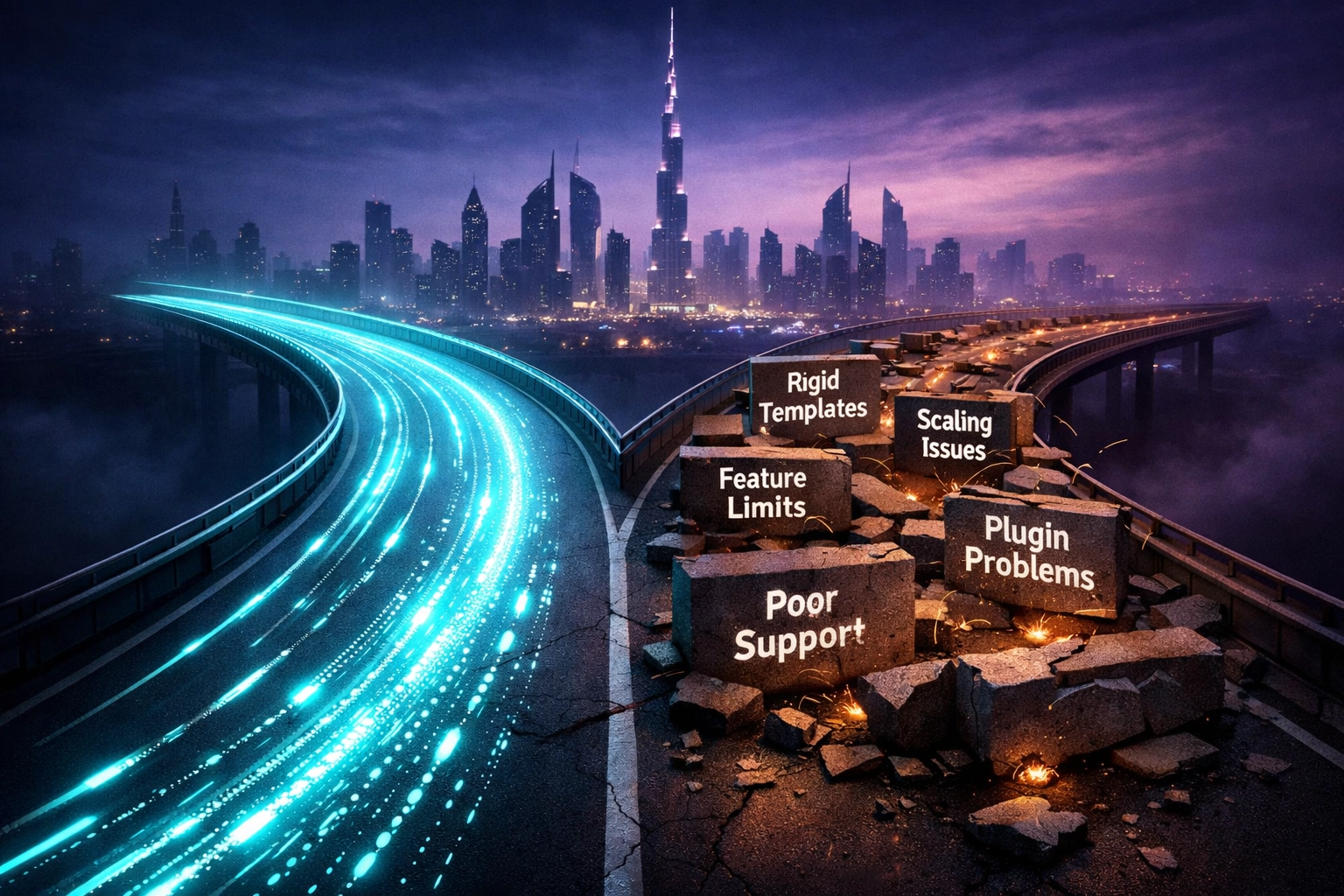
This is where custom development reveals its true value for premium brands. Your ui ux design services shouldn't start with a template and modify: they should start with your brand guidelines and customer research, then build an interface that serves both. Every interaction point becomes an opportunity to reinforce your positioning. Product filtering becomes an elegant discovery experience rather than a utilitarian sidebar. Size guides incorporate your brand voice while reducing returns. Wishlists and saved items feel like personal shopping services rather than database features.
The checkout experience deserves particular attention. Custom development allows you to implement progressive disclosure: showing only necessary information at each step. Trust signals get positioned based on customer hesitation patterns specific to your audience. Payment options expand beyond the standard providers to include UAE-specific methods that your customers prefer. Post-purchase experiences continue the journey with personalized recommendations and content that keeps customers engaged between orders.
When Custom Development Becomes Essential
You'll recognize the inflection point when several factors converge. Your business is scaling rapidly, and the platform limitations create daily friction for your team. SEO has become a major growth channel, and you need advanced implementation that template constraints prevent. Your product catalog complexity: variants, customizations, made-to-order items: pushes against platform capabilities. You're planning long-term brand growth and the switching costs of migrating later grow increasingly prohibitive.
Dubai's premium retailers who've made the transition report that the decision wasn't just about solving current problems: it was about creating capability for future opportunities. When augmented reality product previews become standard, your custom platform can integrate them seamlessly. When social commerce channels evolve, your architecture adapts without platform provider delays. Your digital infrastructure becomes an asset that appreciates rather than a subscription that constrains.
The Investment Perspective for Premium Brands
Evaluate custom website development as you would premium retail space: it's not an expense, it's a revenue-generating asset. The upfront investment typically delivers returns within 12-18 months through improved conversion rates alone. Factor in reduced app dependency costs, eliminated platform transaction fees on higher tiers, and the avoided opportunity cost of stagnant growth, and the financial case strengthens considerably.
The retailers winning in Dubai's premium market understand that their digital flagship deserves the same investment rigor as their flagship store. Would you compromise on your Mall of the Emirates location's interior design to save costs? Your e-commerce platform is equally critical: it's often the first and sometimes only interaction customers have with your brand.
Building for Tomorrow's Luxury Commerce
As you evaluate your e-commerce strategy for 2026 and beyond, consider what Dubai's fastest-growing premium retailers have discovered: custom development isn't about perfection from day one: it's about creating a foundation that evolves with your ambitions. Your platform should enable experimentation, support new features without breaking existing functionality, and scale elegantly as your customer base grows.
The question isn't whether custom e-commerce development matters in 2026. The question is whether your current platform serves your brand promise or compromises it. If you're building a premium retail brand that commands loyalty and premium pricing, your digital experience should reflect that positioning. Template solutions served their purpose: custom development is what comes next for retailers serious about capturing market share in Dubai's competitive luxury landscape.
The retailers discovering this reality aren't just building websites: they're architecting digital flagships that drive growth, enhance brand equity, and create customer experiences worthy of their premium positioning. Your next move determines whether you join them or continue competing with one hand tied behind your back.
Leave a Reply