
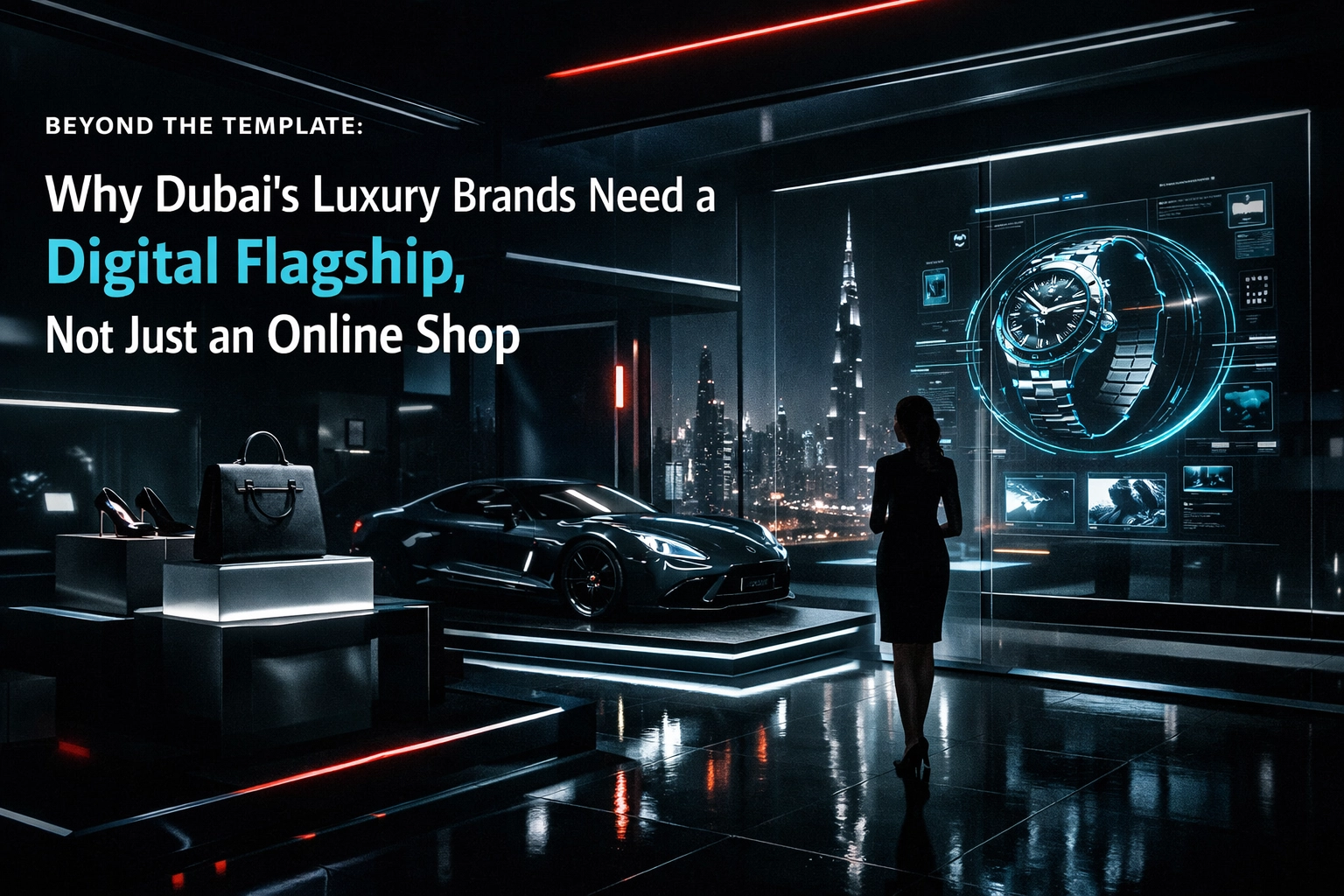
Dubai's luxury market doesn't play by ordinary rules. When your customers are accustomed to private viewings, personalized concierge services, and brand experiences that feel like events rather than errands, your digital presence needs to match that expectation. Yet too many high-end retailers are making a critical mistake: they're treating their online presence like a commodity, not a continuation of their luxury identity.
A template-based online shop might work for mass-market retailers, but for Dubai's luxury brands, it's the equivalent of opening a boutique in a shopping mall food court. You're not just selling products: you're selling prestige, exclusivity, and an experience that customers can't get anywhere else. That's where the concept of a digital flagship becomes essential.
The Template Problem: When Luxury Looks Like Everyone Else
Begin by understanding what happens when luxury brands use off-the-shelf e-commerce templates. The moment your Dhs 15,000 handbag appears in the same grid layout as budget fashion brands, you've commoditized your product. The browsing experience becomes transactional rather than experiential. Customers scroll through product listings the same way they'd browse discount retailers, and suddenly, the exclusivity that justifies your premium pricing has vanished.
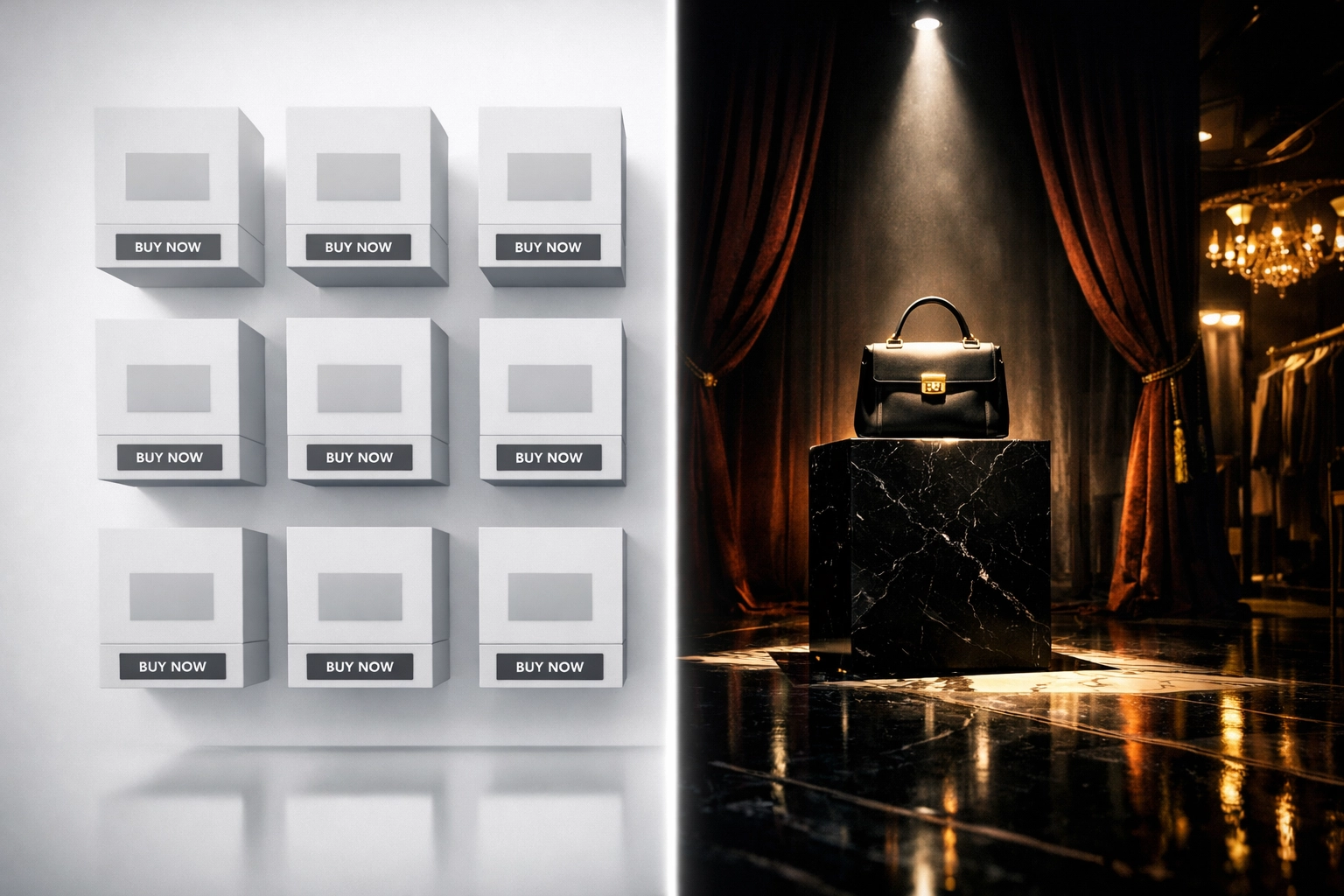
This is particularly damaging in Dubai's market, where social media has democratized access to information. Your customers are hyper-informed, digitally sophisticated, and have seen every template design a hundred times before. They recognize a Shopify theme or a WooCommerce template instantly, and it sends a message: "We took the easy route." For a luxury brand, that's the kiss of death.
Template-based solutions also create technical limitations that directly contradict luxury principles. You can't create exclusive member-only collections. You can't integrate the bespoke personalization engines that high-end customers expect. And most critically, you can't control every pixel of the user experience to ensure it reflects your brand's unique identity. You're building on someone else's foundation, and it shows.
What Makes a Digital Flagship Different
A digital flagship transforms your online presence from a distribution channel into a brand destination. This is where custom website development becomes not just a nice-to-have, but a strategic necessity. Think of brands like Louis Vuitton or Ralph Lauren: their digital experiences don't feel like online shops. They feel like private galleries where every interaction has been thoughtfully designed.
Immersive Visual Storytelling
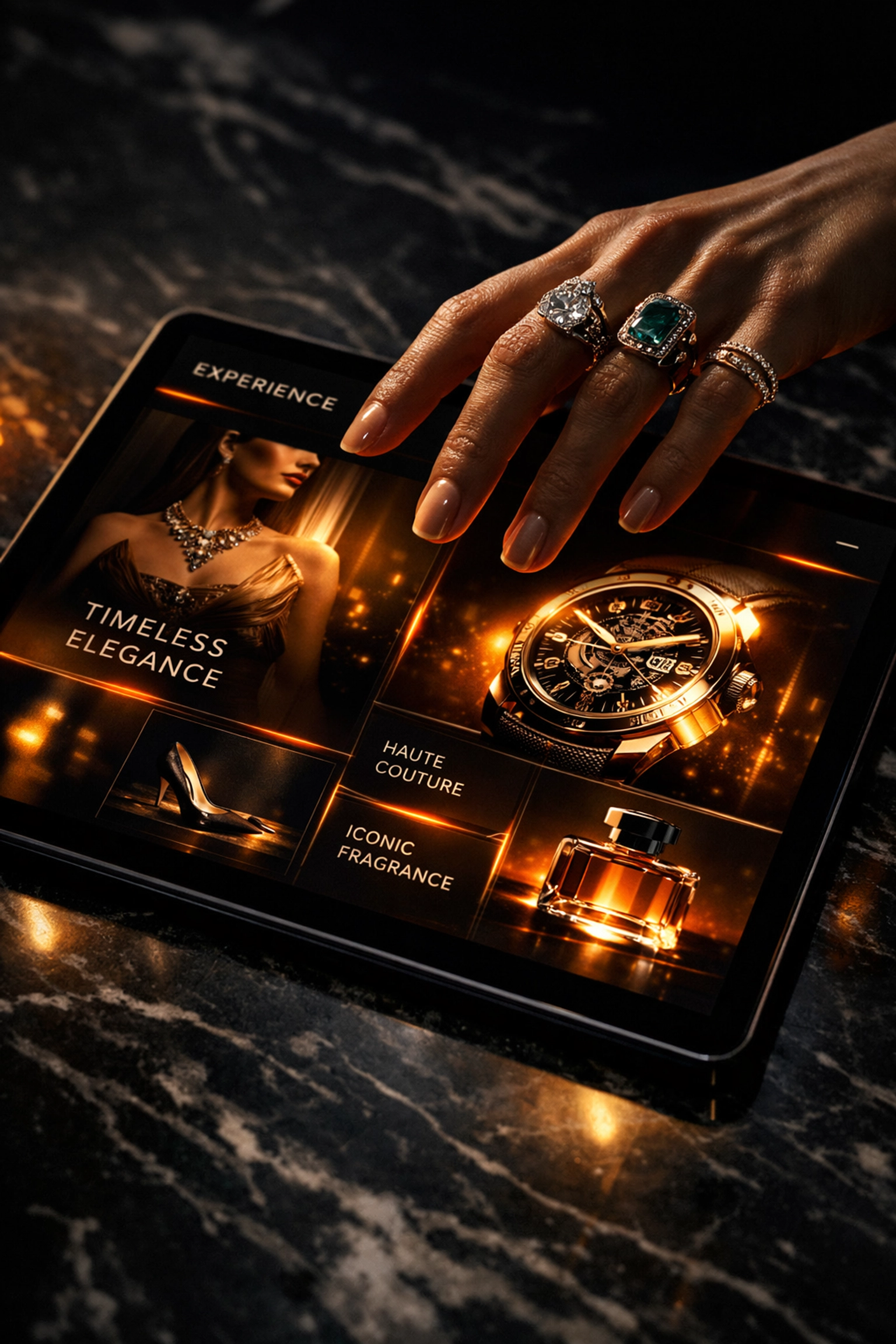
Your digital flagship should transport visitors into your brand's world the moment they arrive. This means custom-built interfaces that showcase your products through cinematic photography, interactive lookbooks, and editorial-style content that tells the story behind each collection. You're not just displaying inventory: you're curating an experience that matches the prestige of walking into your physical boutique on Mohammed bin Rashid Boulevard.
Exclusive Access Architecture
Digital flagships create scarcity in the digital realm through architectural design. This includes members-only sections that require invitation codes, limited-access product launches with countdown timers, and private digital showrooms where VIP customers can preview collections before public release. This requires sophisticated UI UX design services that balance exclusivity with usability: making high-value customers feel special without creating friction.
Personalization at Scale
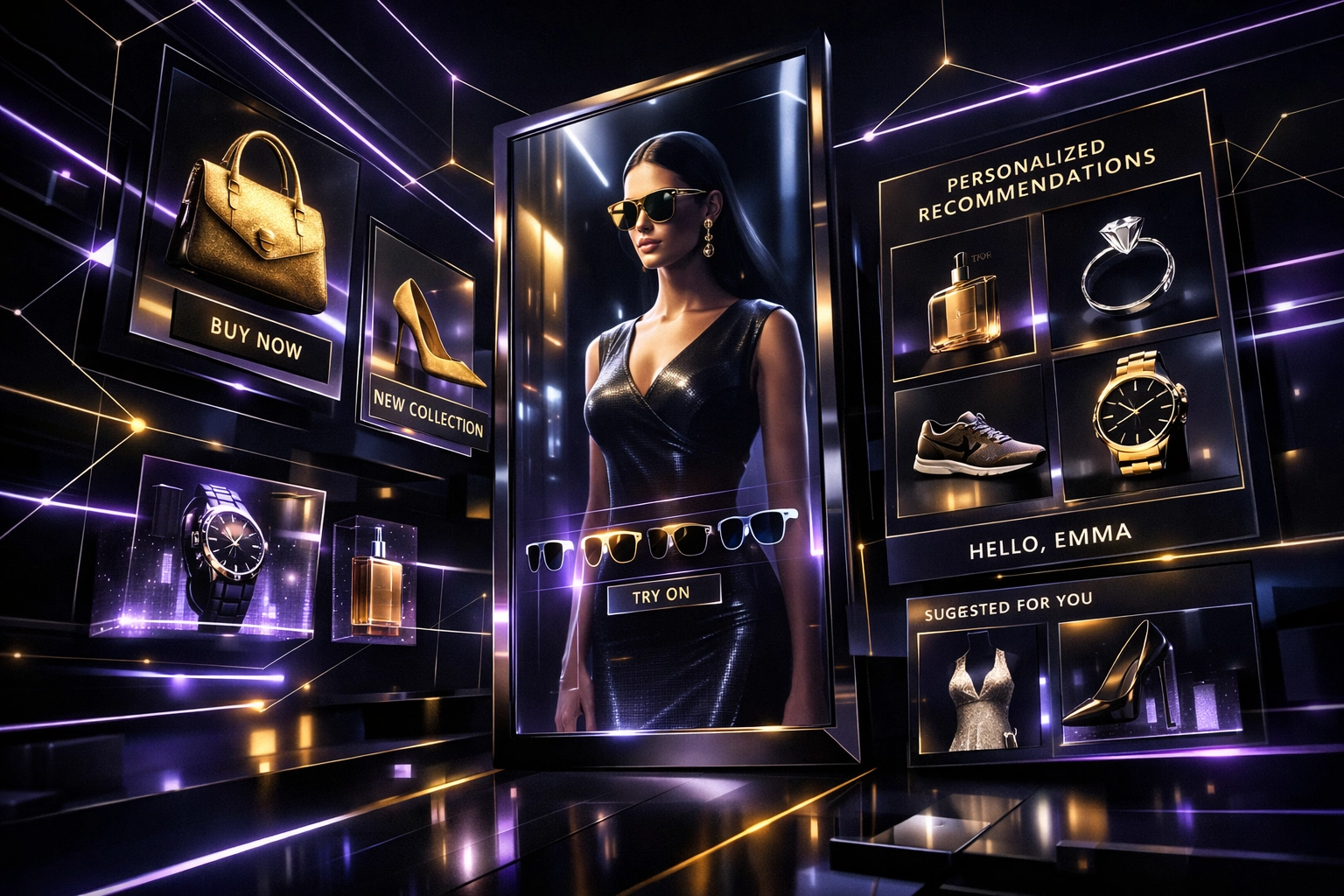
The luxury experience is inherently personal. Your digital flagship should leverage data analytics to remember customer preferences, suggest products based on past purchases, and create individualized landing experiences. But unlike generic recommendation engines, this personalization should feel curated rather than algorithmic. It's the difference between a sales associate who knows your style and an automated "you might also like" widget.
The Technology Behind True Luxury E-Commerce
Achieving this level of sophistication requires what we call "intelligent architecture": the kind of ecommerce website development Dubai luxury brands need goes far beyond installing a plugin. You need headless CMS architecture that separates your content management from your presentation layer, giving you complete control over how every element appears and behaves.
Headless commerce solutions allow your team to update product information, pricing, and inventory across multiple channels: your website, mobile app, in-store displays, and even AR experiences: from a single backend. This creates the seamless "phygital" experience Dubai's luxury consumers expect. They might browse on Instagram, check details on your app, and complete the purchase in-store, all while the system maintains their preferences and purchase history.
The technical requirements also extend to performance optimization. Luxury customers won't wait for slow-loading pages or tolerate clunky checkout processes. Your digital flagship needs to load instantly, even with high-resolution imagery and video content. This requires custom optimization, CDN integration, and server architecture designed specifically for your traffic patterns and content delivery needs.
"In luxury, the medium is the message. A template tells your customers you value convenience over craft. A digital flagship tells them every detail matters: because they matter."
Integration: Where Custom Development Delivers ROI
This is where the investment in bespoke development directly translates to revenue. Custom-built digital flagships can integrate with luxury-specific systems that templates simply can't handle. Think about integrating with high-end CRM platforms that track customer lifetime value and purchase patterns. Or connecting to inventory management systems that can reserve items for VIP customers before they even hit the website.
Payment integration becomes particularly important in Dubai's market. Your system needs to handle multiple currencies seamlessly, integrate with local payment gateways that your customers trust, and support Buy-Now-Pay-Later services from premium providers like Tabby and Postpay: but implemented in a way that maintains your brand's prestige rather than feeling like discount financing.
The ROI becomes clear when you consider customer lifetime value. A luxury customer who feels understood and valued through personalized digital experiences doesn't just make one purchase: they become a brand loyalist. Custom development allows you to track that journey and optimize every touchpoint. You can measure which exclusive features drive the highest-value purchases, which personalization elements increase cart size, and which digital experiences lead to in-store visits.
Dubai's Digital Landscape: Why Location Matters
Dubai's unique market dynamics make the digital flagship approach even more critical. The city has one of the highest smartphone penetration rates globally, and luxury consumers here expect brands to be digitally sophisticated. Your competitors aren't just other Dubai retailers: your customers are comparing you to the global luxury brands they interact with during their travels.
The market also demands a balance between global brand identity and local relevance. Your digital flagship needs to work seamlessly in both English and Arabic, understand local shopping behaviors (like the preference for evening browsing during Ramadan), and integrate with local social platforms where luxury conversations happen. This level of cultural and technical customization simply isn't possible with template solutions.
Dubai's regulatory environment also plays a role. Payment processing, data privacy, and cross-border shipping all have specific requirements that need custom integration. A properly built digital flagship handles these compliance issues invisibly, maintaining the luxury experience while meeting all technical and legal requirements.
From Template to Transformation
The gap between an online shop and a digital flagship is the same gap between mass market and luxury: it's about intention, craft, and understanding that every detail contributes to perception. When you invest in tailored digital solutions, you're not just building a website. You're creating a digital environment that reinforces your brand's value proposition at every interaction.
For Dubai's luxury brands, this isn't about following trends: it's about maintaining the standards that justify premium pricing. Your physical boutiques wouldn't use generic fixtures or off-the-shelf interior design. Your digital flagship deserves the same level of custom craftsmanship. The question isn't whether you can afford bespoke development; it's whether you can afford to look like everyone else in a market where distinction is everything.
The luxury customers shopping in Dubai aren't looking for convenient transactions. They're looking for brands that understand exclusivity, appreciate craftsmanship, and deliver experiences that make them feel like they're part of something exceptional. Your digital presence should do exactly that: not with templates, but with intention.
Leave a Reply