
Begin by understanding this: your luxury brand's digital presence is only as sophisticated as the technology powering it. While template-based platforms like Shopify have democratized e-commerce for the masses, Dubai's most discerning luxury retailers are discovering that one-size-fits-all solutions create one-size-fits-all experiences: and in the premium market, that's a liability you can't afford.
The shift toward headless architecture and custom e-commerce platforms isn't just a technical trend. It's a strategic imperative for brands competing in a market where customers expect personalized experiences that rival the white-glove service of your flagship boutiques on Sheikh Zayed Road.
Understanding Headless Commerce: The Architecture of Excellence
Start with the fundamentals. Traditional e-commerce platforms bind your front-end customer experience directly to your back-end infrastructure. Think of it as a custom suit where the lining is permanently stitched to the fabric: if you want to change one element, you're constrained by the entire garment.
Headless architecture separates these layers entirely. Your front-end presentation layer: what your customers see and interact with: operates independently from your back-end commerce engine. This decoupling creates unprecedented flexibility. You can craft a bespoke customer journey using cutting-edge frameworks like Next.js or React while your robust back-end handles inventory, orders, and customer data seamlessly.
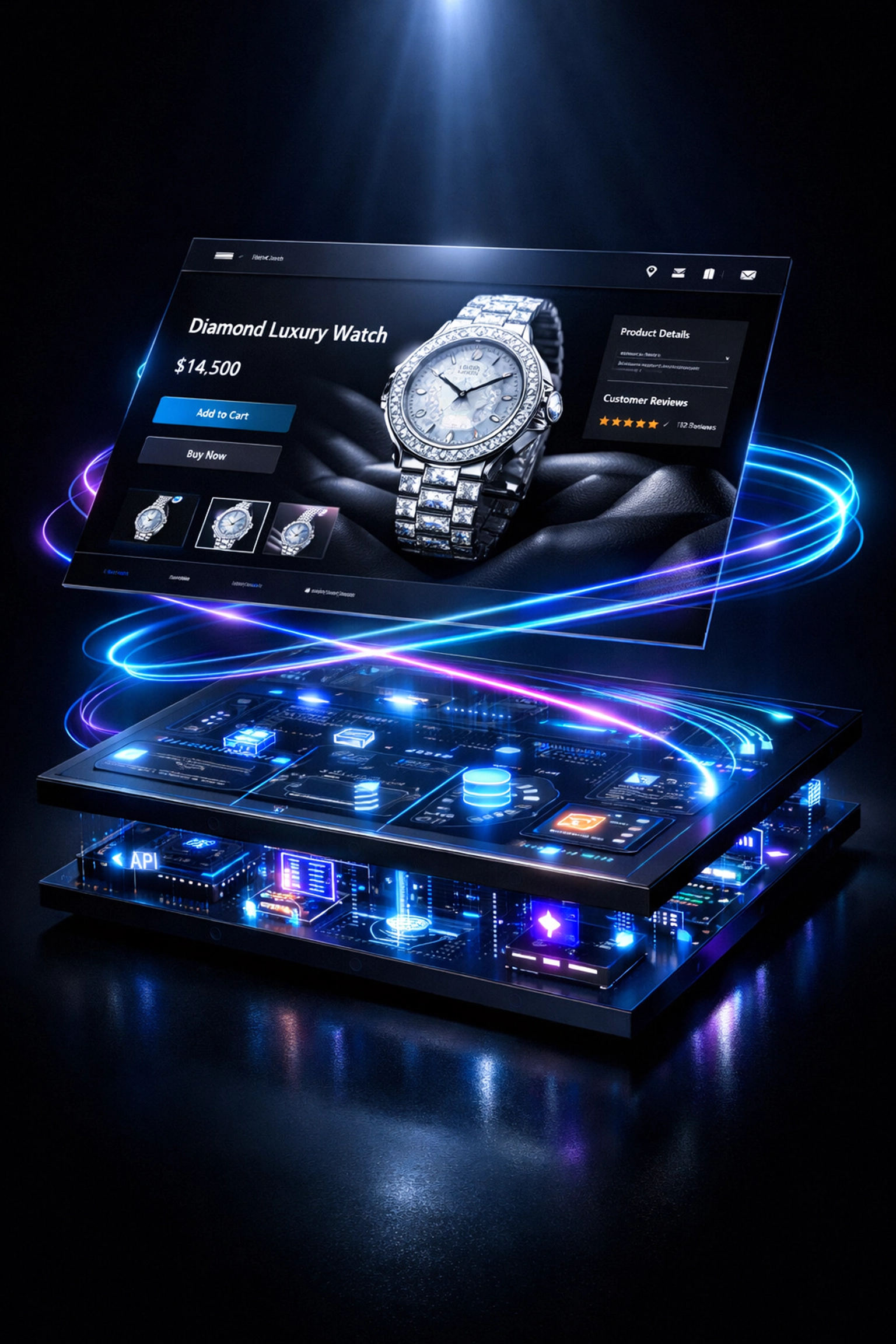
This separation isn't just technical elegance. It's commercial advantage. When a luxury watch retailer in Dubai Marina wanted to create an immersive 3D product configurator that let customers visualize custom timepieces in real-time, their Shopify theme couldn't accommodate it. The headless approach let them build exactly what their high-net-worth clients demanded: without compromising the commerce functionality running beneath.
Why Template Platforms Fall Short for Premium Brands
Use this reality check to evaluate your current platform: Shopify and similar solutions were designed for volume, not exclusivity. They excel at helping thousands of merchants launch quickly with standardized features. But luxury retail operates on fundamentally different principles.
Your premium customers expect experiences that reflect the uniqueness of your products. When three competing luxury brands in Dubai Mall use variations of the same Shopify theme: differing only in logo and color scheme: you've commoditized an experience that should feel extraordinary. Your brand story gets diluted by the architectural limitations of pre-built templates that prioritize efficiency over elegance.
Consider the performance implications. Template platforms load universal scripts and features that 90% of your customers never use, creating bloat that slows page loads. Research shows that luxury shoppers abandon sites that take more than three seconds to load. Custom website development eliminates this waste, delivering razor-sharp performance that matches the precision your brand promises.
The constraint extends to personalization capabilities. While Shopify offers apps for product recommendations, they operate within rigid parameters. A custom platform built for your brand can integrate AI-driven personalization that considers browsing behavior, purchase history, time of day, device type, and even current weather in Dubai to curate experiences that feel genuinely tailored: not algorithmic.
The Dubai Luxury Market Demands Digital Sophistication
This is where local context becomes crucial. Dubai's luxury consumers represent one of the world's most digitally sophisticated demographics. They're accustomed to seamless experiences across touchpoints: from the Apple Store to their private banking apps. They expect nothing less from premium retailers.
The UAE market presents unique requirements that template platforms struggle to accommodate. Multi-currency support isn't just about conversion rates; it's about presenting prices in ways that resonate with your diverse customer base, from local Emiratis to Russian expatriates to Chinese tourists. Custom ecommerce website development Dubai solutions handle these nuances with the finesse luxury brands require.
Payment preferences add another layer of complexity. While Shopify supports popular payment gateways, luxury retailers need deeper integrations with regional preferences: from Apple Pay and Samsung Pay to emerging buy-now-pay-later services tailored for high-value purchases. Custom platforms integrate these options seamlessly within your brand experience, not as third-party plugins that feel bolted on.
"In luxury e-commerce, the technology itself must be invisible: what customers should feel is the effortless manifestation of their desires."
Language and cultural considerations matter profoundly. A template approach to Arabic support means flipping layouts and translating text. A custom approach means understanding that Arabic-speaking luxury consumers expect right-to-left navigation that feels native, not retrofitted. It means typography that honors the elegance of Arabic script, not generic web fonts that compromise aesthetic integrity.
The Technical Advantages That Drive Commercial Results
As you move toward implementation, understand the specific capabilities that headless architecture unlocks. API-first design means your e-commerce engine can power multiple customer touchpoints simultaneously: your desktop site, mobile app, in-store kiosks, and even voice commerce experiences: all from a single source of truth.
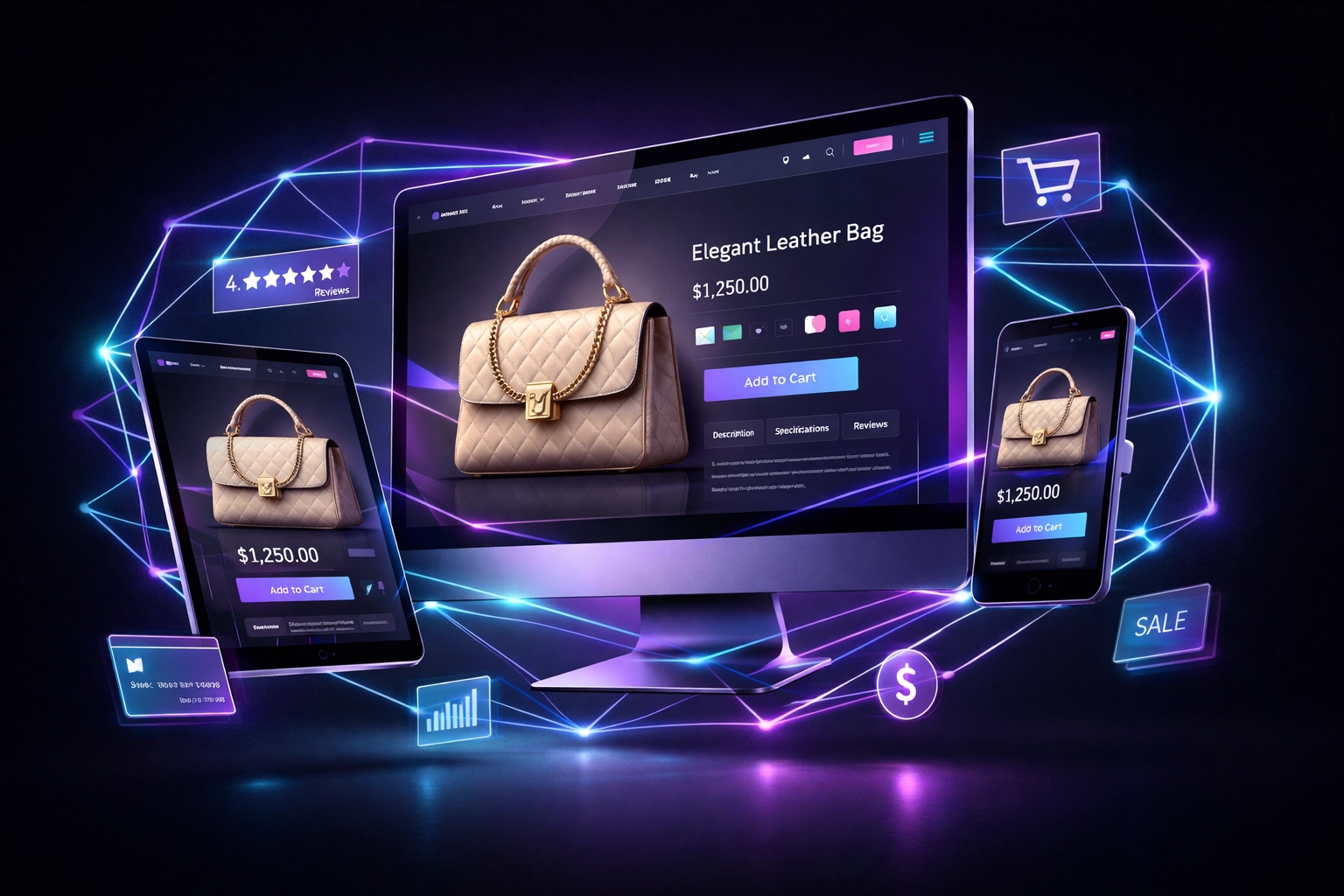
This omnichannel capability transforms customer service. When a client browses luxury handbags on their iPhone during their morning commute, adds items to their wishlist on their desktop at work, and then visits your boutique in Dubai Mall that evening, your sales associates can access that complete journey. They can pull up those wishlisted items, suggest complementary pieces based on browsing behavior, and complete the purchase seamlessly: all because your custom platform orchestrates data across channels.
Performance optimization becomes granular and precise. Custom ui ux design services can implement advanced techniques like progressive image loading, predictive prefetching, and edge caching tailored specifically to your catalog and customer behavior patterns. A jewelry retailer discovered that their high-resolution product photography: essential for showcasing craftsmanship: was creating load times exceeding six seconds on Shopify. Their custom solution implemented intelligent image optimization that maintained visual quality while reducing load times to under 1.5 seconds.
Security and compliance take on heightened importance for luxury brands handling high-value transactions and sensitive customer data. Custom platforms let you implement security protocols that exceed industry standards, from biometric authentication to advanced fraud detection algorithms trained on your specific transaction patterns: protections that pre-built platforms offer only through third-party apps with varying quality.
Building for Scale Without Sacrificing Exclusivity
This is your opportunity to future-proof your digital infrastructure. Headless architecture scales both technically and commercially. As your brand expands into new markets: whether launching in Saudi Arabia or opening a presence in London: your custom platform adapts without requiring fundamental rebuilds.
The flexibility extends to emerging technologies. When augmented reality shopping becomes table stakes for luxury retail, your custom platform integrates these capabilities natively. When social commerce through Instagram and TikTok drives luxury purchases, your headless backend powers those experiences without architectural constraints.
Consider the development velocity this enables. Template platforms force you to wait for providers to release features or rely on third-party app developers whose priorities may not align with luxury retail needs. Custom platforms mean your development team implements exactly what your business requires, on your timeline, aligned with your brand standards.
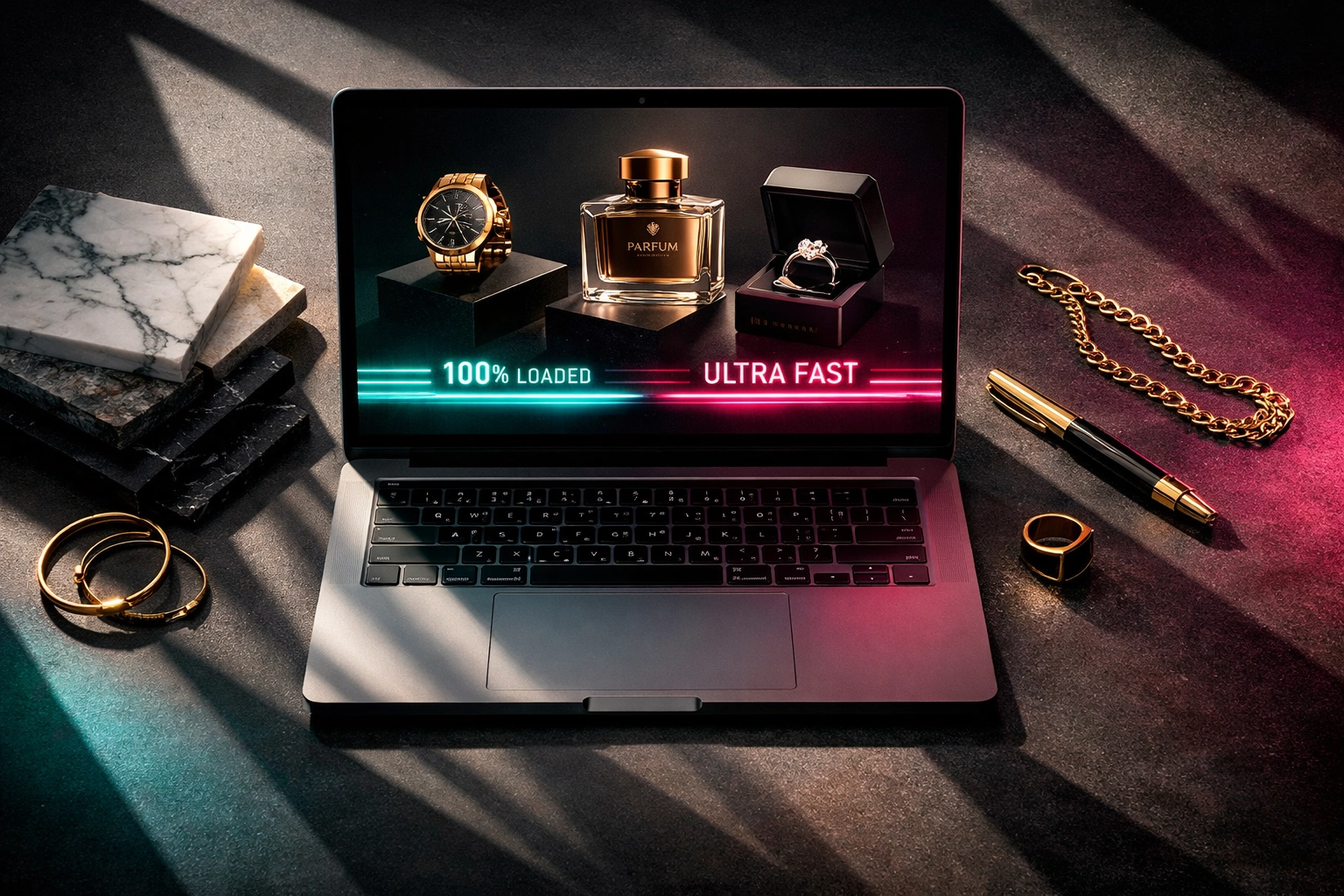
The investment structure differs fundamentally as well. While template platforms appear less expensive initially, luxury brands quickly accumulate costs through premium themes, essential apps, transaction fees, and customization workarounds. Custom development represents a strategic asset: technology infrastructure you own, control, and evolve according to your vision, not a vendor's roadmap.
Making the Transition: Strategic Considerations
Begin your evaluation by auditing your current platform's limitations. Document specific instances where your existing solution compromises the brand experience you envision. These pain points become your requirements for custom development.
Partner with development teams who understand luxury retail, not just e-commerce. The firms behind successful custom website development for premium brands bring insights about customer behavior, conversion optimization, and brand storytelling that pure technical expertise can't replicate.
Plan the migration thoughtfully. Headless transitions don't require complete shutdowns or data loss. Experienced teams implement phased approaches: perhaps launching your new custom front-end for specific product categories first, validating performance and conversion improvements before full migration.
Investment in custom platforms typically ranges from AED 150,000 to AED 500,000+ for luxury retailers, depending on complexity and feature requirements. This represents six to eighteen months of Shopify Plus fees plus apps: except you're building appreciating equity in proprietary technology rather than renting someone else's infrastructure.
The Competitive Imperative
Use this clarity to guide your decision: in Dubai's luxury market, digital experience increasingly determines brand perception. Your website isn't a digital brochure: it's the primary impression for most customers, the environment where brand affinity forms, and the platform where commercial relationships begin.
The brands winning this market understand that technology investments aren't cost centers: they're competitive advantages. When your custom platform delivers experiences that competitors using template solutions simply cannot match, you're not just improving conversion rates. You're reinforcing your positioning as a truly premium brand that invests in excellence across every touchpoint.
The headless advantage isn't theoretical. It's visible in faster load times, measurable in higher conversion rates, and evident in customer feedback that praises seamless experiences. For luxury brands serious about digital excellence, the question isn't whether to adopt custom platforms: it's how quickly you can transition before competitors establish insurmountable technical advantages.
Your customers expect extraordinary. Your technology should enable it( not limit it.)
Leave a Reply